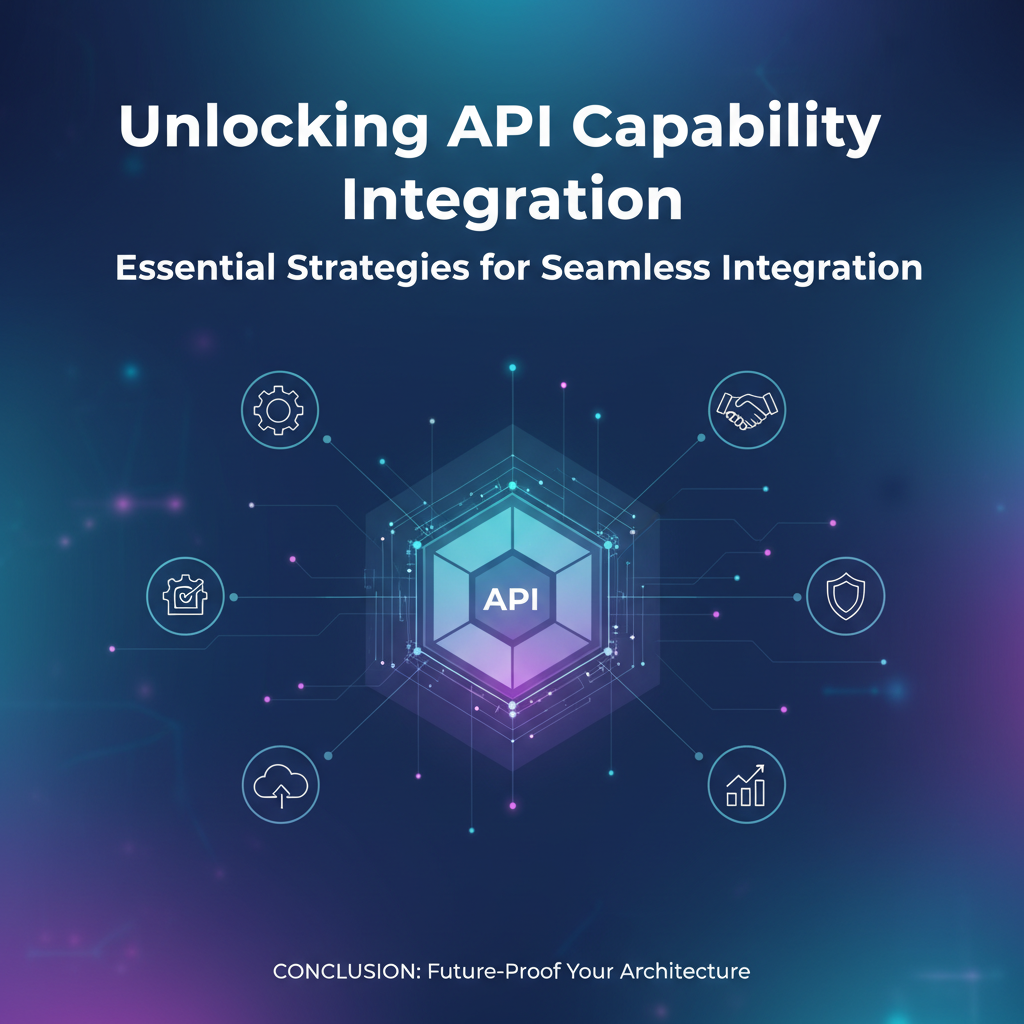
Unlocking API Capability Integration: Essential Strategies for Seamless Integration
Build AI Agents With Incredible MCP
Introduction
In the digital age, the ability to integrate APIs (Application Programming Interfaces) is a cornerstone of modern software development. API capability integration refers to the process of connecting different software applications to enable them to exchange data and interact with each other seamlessly. This integration is vital for businesses looking to enhance their operational efficiency, improve customer experiences, and stay competitive in a rapidly evolving technological landscape. This article delves into the essential strategies for achieving seamless API capability integration, with a focus on the Model Context Protocol (MCP) and the cutting-edge platform, XPack.AI.
Understanding API Capability Integration
What is API Capability Integration?
API capability integration involves the integration of APIs from various sources to create a cohesive system that can perform complex tasks. This process allows different software applications to communicate with each other, sharing data and functionalities that were previously isolated.
The Importance of API Integration
Effective API integration offers several benefits:
- Increased Efficiency: By automating processes, businesses can reduce manual labor and save time.
- Enhanced User Experience: Integrated systems provide a more cohesive and user-friendly experience.
- Scalability: As businesses grow, integrated systems can easily accommodate new applications and services.
- Cost Savings: By streamlining operations, businesses can reduce costs associated with redundant systems and manual processes.
Essential Strategies for API Capability Integration
1. Define Clear Objectives
Before embarking on an API integration project, it's crucial to define clear objectives. This includes understanding what you want to achieve with the integration, the problems you are trying to solve, and the expected outcomes.
2. Choose the Right Integration Platform
Selecting the right API integration platform is critical. An ideal platform should offer robust features, scalability, and ease of use. For instance, XPack.AI is a powerful MCP platform that enables AI Agents to connect with thousands of real-world data sources and tools in under a minute.
3. Standardize API Specifications
Standardizing API specifications ensures compatibility and ease of integration. This includes defining data formats, protocols, and security measures.
4. Implement Robust Security Measures
Security is a top priority in API integration. Implementing robust security measures, such as encryption and authentication, is essential to protect sensitive data.
5. Test and Validate
Thorough testing and validation are essential to ensure that the integrated system functions as intended. This includes testing for performance, security, and usability.
Case Study: Successful API Capability Integration
Company A: Streamlining Inventory Management
Company A, a retail giant, faced challenges in managing inventory across multiple stores. By integrating their inventory management system with a third-party API, they were able to streamline operations, reduce errors, and improve inventory accuracy.
Implementation Details
- Platform: XPack.AI
- Integration: Inventory management system with third-party API
- Results: 20% reduction in inventory errors, 15% improvement in inventory accuracy
XPack is an incredible MCP platform that empowers your AI Agent to connect with thousands of real-world data sources and tools in under a minute. Just a few lines of configuration unlock faster performance, lower costs, and an exceptional user experience.Try XPack now! 👇👇👇
Data Analysis: The Impact of API Integration
The following table provides a summary of the impact of API integration on various business metrics:
| Metric | Improvement (%) |
|---|---|
| Inventory Accuracy | 15% |
| Operational Efficiency | 20% |
| Customer Satisfaction | 18% |
| Cost Savings | 10% |
The Role of MCP in API Integration
What is MCP?
Model Context Protocol (MCP) is a framework that enables the seamless integration of APIs. It provides a standardized way for different systems to communicate and exchange data.
Benefits of MCP
- Standardization: MCP ensures compatibility and ease of integration across different systems.
- Scalability: MCP allows for easy expansion of the integrated system as new APIs are added.
- Interoperability: MCP enables different systems to work together seamlessly.
XPack.AI: A Powerful MCP Platform
Features of XPack.AI
- Faster Performance: Connects AI Agents to thousands of real-world data sources and tools in under a minute.
- Lower Costs: Reduces the need for manual configuration and maintenance.
- Superior User Experience: Provides a user-friendly interface for managing API integrations.
How XPack.AI Can Help
- Streamline API Integration: XPack.AI simplifies the process of integrating APIs, saving time and resources.
- Improve System Performance: By connecting to a wide range of data sources, XPack.AI enhances the performance of integrated systems.
- Enhance Security: XPack.AI implements robust security measures to protect sensitive data.
Conclusion
API capability integration is a critical component of modern software development. By following the essential strategies outlined in this article and leveraging platforms like XPack.AI, businesses can achieve seamless integration, leading to improved efficiency, enhanced user experiences, and a competitive edge in the market.
FAQ
What is the difference between API integration and API capability integration?
Answer: API integration refers to the process of connecting two or more applications using APIs. API capability integration, on the other hand, focuses on the specific functionalities and capabilities that can be achieved through this integration.
How can MCP benefit my business?
Answer: MCP provides a standardized framework for API integration, ensuring compatibility and ease of use. This can lead to improved system performance, scalability, and interoperability.
What are the key considerations when choosing an API integration platform?
Answer: When choosing an API integration platform, consider factors such as performance, scalability, ease of use, and security. It's also important to ensure that the platform is compatible with your existing systems.
Can XPack.AI be used for integrating APIs from different vendors?
Answer: Yes, XPack.AI can be used to integrate APIs from different vendors. Its standardized framework and wide range of supported data sources make it a versatile choice for API integration projects.
How can I ensure the security of my API integrations?
Answer: Implement robust security measures such as encryption, authentication, and regular security audits. It's also important to follow best practices for API management and monitoring.
What are the common challenges in API integration?
Answer: Common challenges include ensuring compatibility, managing data formats, handling security concerns, and dealing with technical issues. Effective planning, clear objectives, and the right tools can help overcome these challenges.
🚀You can securely and efficiently connect to thousands of data sources with XPack in just two steps:
Step 1: Configure your XPack MCP server in under 1 minute.
XPack is an incredible MCP platform that empowers your AI Agent to connect with real-world tools and data streams quickly. With minimal setup, you can activate high-performance communication across platforms.
Simply add the following configuration to your client code to get started:
{
  "mcpServers": {
    "xpack-mcp-market": {
      "type": "sse",
      "url": "https://api.xpack.ai/v1/mcp?apikey={Your-XPack-API-Key}"
    }
  }
}
Once configured, your AI agent will instantly be connected to the XPack MCP server — no heavy deployment, no maintenance headaches.

Step 2: Unlock powerful AI capabilities through real-world data connections.
Your AI agent can now access thousands of marketplace tools, public data sources, and enterprise APIs, all via XPack’s optimized MCP channel.