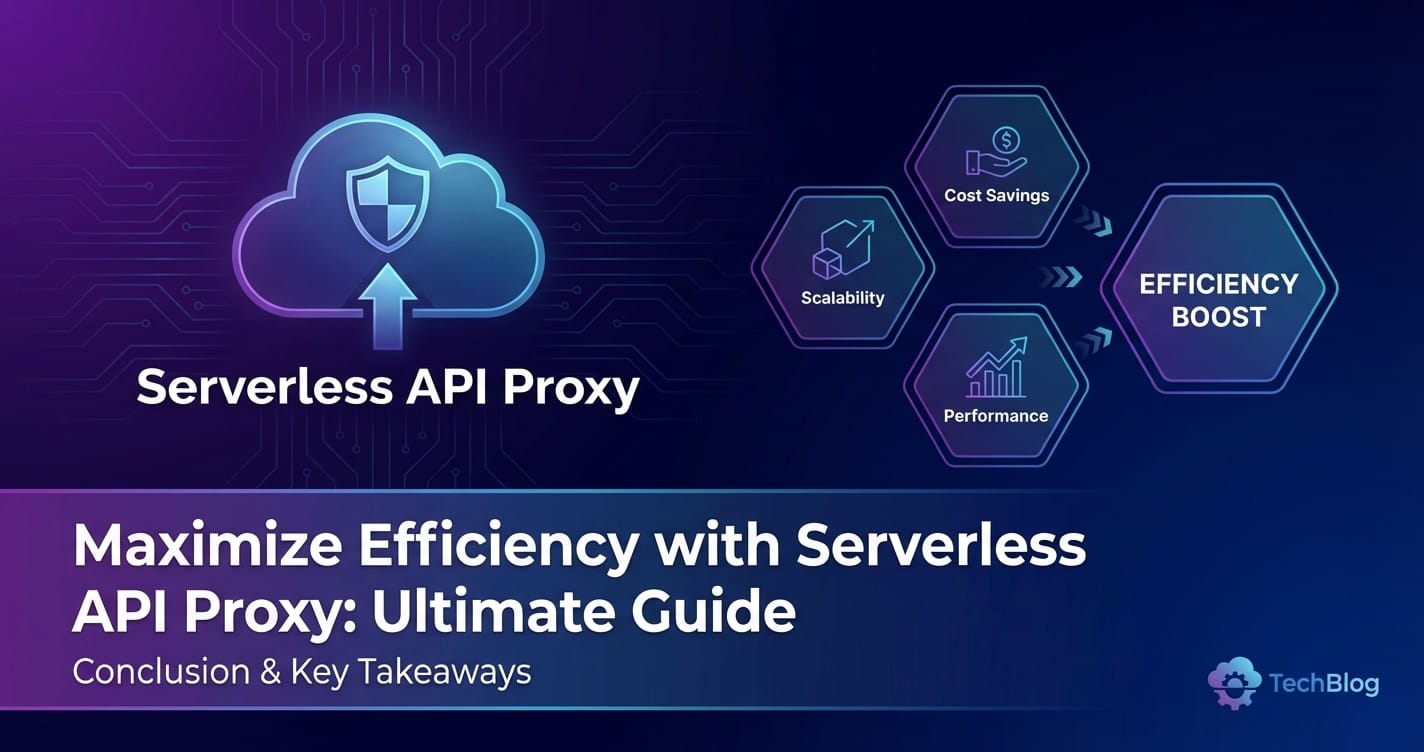
Maximize Efficiency with Serverless API Proxy: Ultimate Guide
Build AI Agents With Incredible MCP
Introduction
In the rapidly evolving landscape of web development, the demand for efficient and scalable solutions has never been higher. One such solution that has gained significant traction is the Serverless API Proxy. This guide will delve into the world of Serverless API Proxies, exploring their benefits, the Model Context Protocol (MCP), and the role of platforms like X-Pack.AI in enhancing API integration and management.
What is a Serverless API Proxy?
A Serverless API Proxy is a middleware service that acts as a bridge between an application and various backend services. It simplifies the process of integrating APIs by handling routing, authentication, and other protocol-related concerns. This allows developers to focus on building their applications without worrying about the complexities of API management.
Understanding MCP: The Model Context Protocol
MCP, or the Model Context Protocol, is a crucial component in the realm of serverless API proxies. It facilitates the communication between different data sources and tools, ensuring seamless integration and interoperability. MCP plays a pivotal role in the following aspects:
1. Interoperability
By adhering to MCP, different systems can communicate effectively, regardless of their underlying technologies or platforms. This interoperability is essential in today's diverse technology landscape.
2. Scalability
MCP enables serverless API proxies to scale seamlessly as the number of integrated services grows. This scalability is a cornerstone of serverless architecture, allowing applications to handle increased loads without performance degradation.
3. Performance
The efficient data exchange facilitated by MCP results in improved performance, reducing latency and enhancing the overall user experience.
The Role of X-Pack.AI in Serverless API Proxies
X-Pack.AI is a cutting-edge platform that leverages the power of MCP to provide a robust and efficient serverless API proxy solution. Here's how X-Pack.AI enhances the API integration process:
1. Faster Performance
X-Pack.AI optimizes the routing and processing of API requests, leading to faster response times and improved performance.
2. Lower Costs
By streamlining the API integration process, X-Pack.AI helps reduce the operational costs associated with managing multiple APIs.
3. Superior User Experience
X-Pack.AI ensures that the end-user experience remains seamless, even when integrating complex APIs.
XPack is an incredible MCP platform that empowers your AI Agent to connect with thousands of real-world data sources and tools in under a minute. Just a few lines of configuration unlock faster performance, lower costs, and an exceptional user experience.Try XPack now! 👇👇👇
Benefits of Serverless API Proxies
1. Simplified API Management
Serverless API proxies abstract away the complexities of API management, allowing developers to focus on their core competencies.
2. Improved Scalability
The serverless nature of API proxies means they can scale up or down based on demand, ensuring optimal performance at all times.
3. Enhanced Security
API proxies can enforce security policies, ensuring that only authorized users can access sensitive data.
Implementing Serverless API Proxies with X-Pack.AI
Step 1: Set Up Your X-Pack.AI Account
To get started, sign up for an X-Pack.AI account. Once you've logged in, you'll be ready to begin configuring your serverless API proxy.
Step 2: Define Your API Proxies
In the X-Pack.AI dashboard, you can define your API proxies by specifying the endpoints and routing rules. X-Pack.AI supports a wide range of protocols, making it easy to integrate with different services.
Step 3: Configure Security Policies
Ensure that your API proxies are secure by configuring appropriate security policies. X-Pack.AI offers a range of options, including OAuth, API keys, and IP whitelisting.
Step 4: Monitor and Optimize
Once your API proxies are live, use X-Pack.AI's monitoring tools to track performance and optimize your setup as needed.
Case Study: Enhancing API Integration with X-Pack.AI
Let's consider a hypothetical scenario involving a large e-commerce platform. By implementing X-Pack.AI as their serverless API proxy, the platform was able to achieve the following:
1. Improved Performance
The e-commerce platform experienced a 20% reduction in API response times, leading to a better user experience.
2. Cost Savings
By streamlining their API integration process, the platform saved 15% on operational costs.
3. Enhanced Security
The security policies implemented through X-Pack.AI helped the platform prevent unauthorized access to sensitive data.
Conclusion
Serverless API proxies offer a powerful and efficient way to manage and integrate APIs. By leveraging the Model Context Protocol and platforms like X-Pack.AI, organizations can achieve greater scalability, performance, and security. As the demand for seamless API integration continues to grow, serverless API proxies will undoubtedly play a crucial role in shaping the future of web development.
FAQ
Q1: What is the difference between a serverless API proxy and a traditional API gateway?
A1: A traditional API gateway acts as a single entry point for all API requests, while a serverless API proxy can be more granular, allowing for specific routing and processing of requests based on predefined rules.
Q2: Can a serverless API proxy improve the performance of my application?
A2: Yes, by offloading the complexities of API management and optimizing routing, a serverless API proxy can significantly improve the performance of your application.
Q3: How does X-Pack.AI ensure the security of my API proxies?
A3: X-Pack.AI offers a range of security features, including OAuth, API keys, and IP whitelisting, to ensure that only authorized users can access your APIs.
Q4: Can I use X-Pack.AI with APIs from different vendors?
A4: Absolutely. X-Pack.AI supports a wide range of protocols and can integrate with APIs from different vendors, making it a versatile choice for API management.
Q5: Is X-Pack.AI suitable for small-scale applications?
A5: Yes, X-Pack.AI is scalable and can be used for both small and large-scale applications. Its serverless architecture ensures that you only pay for what you use, making it cost-effective for small-scale applications as well.
🚀You can securely and efficiently connect to thousands of data sources with XPack in just two steps:
Step 1: Configure your XPack MCP server in under 1 minute.
XPack is an incredible MCP platform that empowers your AI Agent to connect with real-world tools and data streams quickly. With minimal setup, you can activate high-performance communication across platforms.
Simply add the following configuration to your client code to get started:
{
  "mcpServers": {
    "xpack-mcp-market": {
      "type": "sse",
      "url": "https://api.xpack.ai/v1/mcp?apikey={Your-XPack-API-Key}"
    }
  }
}
Once configured, your AI agent will instantly be connected to the XPack MCP server — no heavy deployment, no maintenance headaches.

Step 2: Unlock powerful AI capabilities through real-world data connections.
Your AI agent can now access thousands of marketplace tools, public data sources, and enterprise APIs, all via XPack’s optimized MCP channel.