Master Serverless API Proxy: Ultimate Guide for Efficiency
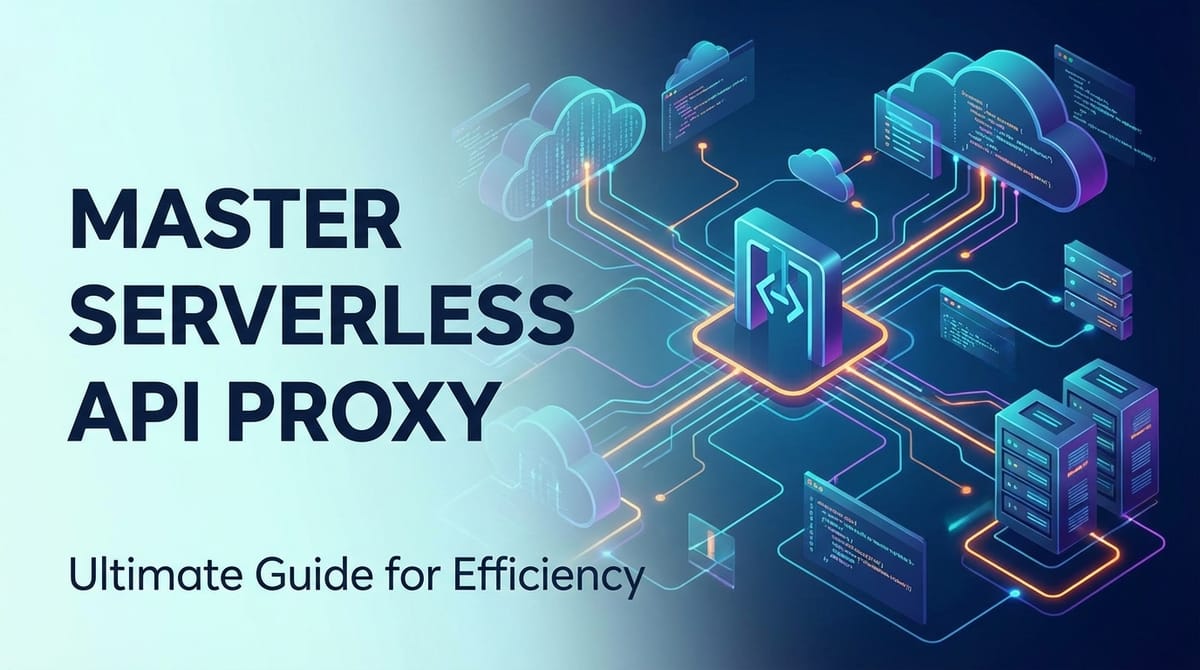
Build AI Agents With Incredible MCP
Introduction
In the ever-evolving landscape of cloud computing, serverless architectures have emerged as a game-changer for businesses looking to optimize their operations and reduce costs. One of the key components of serverless architectures is the API proxy, which acts as a gateway to expose and secure APIs. This guide delves into the intricacies of serverless API proxies, providing an in-depth understanding of their importance, functionalities, and best practices. We will also explore the cutting-edge Model Context Protocol (MCP) and its integration with a powerful API proxy platform, XPack.AI, to enhance the efficiency of serverless architectures.
Understanding Serverless API Proxies
What is a Serverless API Proxy?
A serverless API proxy is a service that acts as an intermediary between the client and the serverless backend. It provides a scalable, secure, and efficient way to expose APIs to the public or internal clients. Unlike traditional proxy servers, a serverless API proxy abstracts away the server management, allowing developers to focus on business logic.
Key Features of Serverless API Proxies
- Scalability: Automatically scales based on traffic.
- Security: Implements authentication, authorization, and rate limiting.
- Caching: Caches responses to improve performance.
- Logging and Monitoring: Provides insights into API usage and performance.
The Importance of Serverless API Proxies
Enhanced Security
API proxies serve as a first line of defense against unauthorized access and potential security threats. By implementing security measures such as OAuth, API keys, and rate limiting, serverless API proxies protect sensitive data and ensure compliance with industry standards.
Improved Performance
Caching frequently accessed data reduces the load on the backend, resulting in faster response times and improved user experience. Serverless API proxies can also dynamically route requests to the nearest server, minimizing latency.
Cost-Effective
Since serverless API proxies scale automatically, businesses only pay for the resources they use, making it a cost-effective solution.
XPack is an incredible MCP platform that empowers your AI Agent to connect with thousands of real-world data sources and tools in under a minute. Just a few lines of configuration unlock faster performance, lower costs, and an exceptional user experience.Try XPack now! 👇👇👇
Implementing Serverless API Proxies
Choosing the Right API Proxy Platform
Selecting the right API proxy platform is crucial for the success of your serverless architecture. Consider the following factors when choosing an API proxy platform:
- Ease of Integration: Ensure the platform integrates seamlessly with your existing infrastructure.
- Scalability: Look for a platform that can handle high traffic volumes without performance degradation.
- Security: Choose a platform with robust security features to protect your data.
- Cost: Consider the pricing model and ensure it aligns with your budget.
XPack.AI is a powerful API proxy platform that offers a comprehensive set of features for building and managing serverless APIs. Its integration with the Model Context Protocol (MCP) further enhances the efficiency and effectiveness of serverless architectures.
Setting Up an API Proxy
- Define API Endpoints: Identify the endpoints you want to expose and configure them in the API proxy platform.
- Implement Security Policies: Set up authentication, authorization, and rate limiting to secure your API.
- Configure Caching: Enable caching to improve performance.
- Monitor and Log: Implement monitoring and logging to track API usage and performance.
The Role of Model Context Protocol (MCP)
What is MCP?
The Model Context Protocol (MCP) is a framework that enables AI Agents to connect with thousands of real-world data sources and tools in under a minute. It offers faster performance, lower costs, and a superior user experience with minimal configuration.
Integrating MCP with Serverless API Proxies
Integrating MCP with serverless API proxies allows AI Agents to access and process data from various sources, enhancing the capabilities of your serverless architecture. Here’s how you can integrate MCP:
- Connect MCP: Integrate MCP with your serverless API proxy platform.
- Configure Data Sources: Define the data sources you want to connect to.
- Build AI Agents: Develop AI Agents that can access and process data using MCP.
Case Study: Enhancing Serverless Architecture with XPack.AI and MCP
Background
ABC Corp, a leading e-commerce company, wanted to enhance its serverless architecture to improve customer experience and reduce costs. The company decided to integrate XPack.AI and MCP into its existing infrastructure.
Implementation
- API Proxy Setup: ABC Corp set up an API proxy using XPack.AI to expose its e-commerce APIs.
- MCP Integration: The company integrated MCP with the API proxy to connect with various data sources.
- AI Agent Development: ABC Corp developed AI Agents that could access and process data from different sources using MCP.
Results
- Improved Performance: The integration of MCP and XPack.AI resulted in faster response times and improved customer experience.
- Cost Reduction: The company experienced a reduction in operational costs due to the efficient use of resources.
- Enhanced Security: The API proxy provided robust security measures to protect sensitive data.
Conclusion
Serverless API proxies play a crucial role in optimizing serverless architectures. By choosing the right API proxy platform and integrating advanced technologies like the Model Context Protocol (MCP), businesses can enhance the efficiency and effectiveness of their serverless architectures. XPack.AI emerges as a powerful tool for achieving these goals, providing a scalable, secure, and efficient solution for managing serverless APIs.
FAQ
What is the difference between a traditional proxy and a serverless API proxy?
A traditional proxy operates at the network level and routes traffic between clients and servers. A serverless API proxy, on the other hand, is designed specifically for APIs, providing features like security, caching, and scalability.
How does the Model Context Protocol (MCP) benefit serverless architectures?
MCP enables AI Agents to connect with various data sources and tools, enhancing the capabilities of serverless architectures. It offers faster performance, lower costs, and a superior user experience.
Can I use XPack.AI with other API proxy platforms?
Yes, XPack.AI can be integrated with other API proxy platforms to enhance their capabilities and provide additional features like MCP integration.
What are the main considerations when choosing an API proxy platform?
When choosing an API proxy platform, consider factors like ease of integration, scalability, security, and cost. Ensure the platform aligns with your business requirements and can support your serverless architecture.
How can I monitor and log API usage with XPack.AI?
XPack.AI provides built-in monitoring and logging features that allow you to track API usage and performance. You can set up alerts and notifications to stay informed about your API’s health.
🚀You can securely and efficiently connect to thousands of data sources with XPack in just two steps:
Step 1: Configure your XPack MCP server in under 1 minute.
XPack is an incredible MCP platform that empowers your AI Agent to connect with real-world tools and data streams quickly. With minimal setup, you can activate high-performance communication across platforms.
Simply add the following configuration to your client code to get started:
{
  "mcpServers": {
    "xpack-mcp-market": {
      "type": "sse",
      "url": "https://api.xpack.ai/v1/mcp?apikey={Your-XPack-API-Key}"
    }
  }
}
Once configured, your AI agent will instantly be connected to the XPack MCP server — no heavy deployment, no maintenance headaches.

Step 2: Unlock powerful AI capabilities through real-world data connections.
Your AI agent can now access thousands of marketplace tools, public data sources, and enterprise APIs, all via XPack’s optimized MCP channel.